

Planning a Trip to the Dolomites: A Practical First-Timer’s Guide.
There’s nothing quite like the Dolomites – the rolling alpine meadows, jagged peaks, and those views that look straight out of a postcard. But planning a trip here can feel a little overwhelming at first. The area is huge, and figuring out where to stay, what to see, and how to get around takes some research.
That’s where this guide comes in! I’m breaking down everything you need to know, from logistics to must-see spots. This way, you can plan your Dolomites trip with confidence and make the most of your time in this incredible part of Italy.
Updated for 2026 based on my recent trip/research
Disclaimer: We use affiliate links and may receive a small commission on purchases at no extra cost to you. Thank you for your support!
The Best Time to Visit the Dolomites
The best time to hike in the Dolomites is early June through late September. During these months, most trails are clear of snow, rifugios are open, and the weather is warm but not too hot. July and August are the busiest months, so if you prefer fewer crowds, aim for early June or late September.
- Peak Hiking Season (Late June – Mid-September): Perfect weather and all trails and lifts are open, but expect bigger crowds and higher prices—especially in August.
- Shoulder Season (Late May – Early October): Fewer crowds and better deals, but some cable cars and mountain huts may be closed. Early snow is also possible, so always check lift status before you go!
- Winter Season (December – March): Best for skiing and snow activities. It’s a totally different experience from the summer months.
If you’re thinking about visiting in September (like we did), check out this article to see what to expect that month.

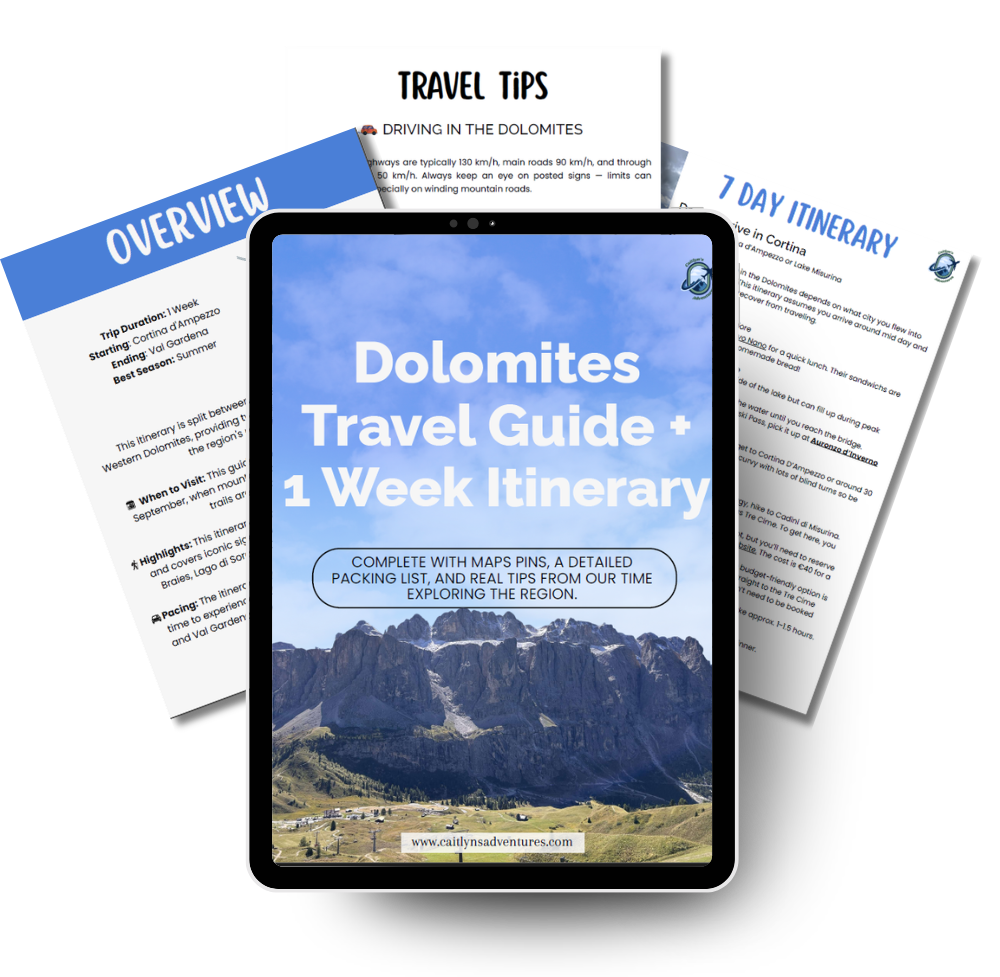
Dolomites Travel Guide + 7 Day Itinerary
A complete 7 day Dolomites travel guide split into 4 days in the east and 3 days in the west, designed to help you explore must-see viewpoints, hikes, and hidden gems without the stress of trip planning. Includes a custom map, packing tips, accommodation suggestions, and a detailed day-by-day itinerary.
Getting Around the Dolomites: Do you Need to Rent a Car?
The Dolomites don’t have their own major airport, so most travelers fly into Venice (VCE), or Innsbruck (INN). Venice is often the easiest option with the most flight choices. From there, you can:
- Rent a car: This gives you the most flexibility to explore different valleys and trailheads. Roads are well maintained and the scenery alone makes the drive worth it.
- Use public transport: If you’d rather not drive, there are train and bus connections from Venice or Innsbruck to major Dolomites towns like Cortina d’Ampezzo, Bolzano, and Val Gardena. It takes longer but is doable with some planning. Once you are in the Dolomites Cortina and Val Gardena both have a pretty good bus system.
Overall, if you want the most freedom and flexibility, a rental car is the way to go.
⚠️ Essential Tip: If you are a US, Canadian, or non-EU driver planning to rent a car in the Dolomites, you are legally required to have an International Driving Permit (IDP) alongside your valid home driver’s license.

Where to Stay
The Dolomites are split into two main areas: Val Gardena on the west side and Cortina d’Ampezzo on the east. The drive between them takes about two hours. If you’re staying more than a few days, it makes sense to split your time so you can fully explore each area.
The east side is home to highlights like Tre Cime di Lavaredo, Lago di Braies, Lago di Misurina, and Cinque Torri. On the west side, you’ll find Puez-Odle Nature Park, Alpe di Siusi, and Seceda. If you only have 1–3 days in the Dolomites, I recommend picking one area and exploring that side thoroughly.


On our trip, we spent 4 nights in Cortina and 3 nights in Val Gardena, which felt like the perfect amount of time to experience both areas without feeling rushed.
Another great option is staying in Rifugios (mountain huts). These are unique overnight stays along hiking routes — some are simple dorm-style accommodations, while others offer private rooms and full meals. They’re an unforgettable experience, but they do book up fast.


Tip: Book your accommodations early, especially during peak hiking season in summer or ski season in winter. Popular spots fill up quickly.
For a closer look at the towns in the Dolomites and the best places to stay, checkout this article.
How Long to Stay in the Dolomites
The Dolomites cover a huge area, and it’s not the kind of place you want to rush through. The amount of time you’ll want to spend here really depends on what you want to do: hiking, sightseeing, relaxing, or a mix of everything.
If you’re short on time, 2–3 days is enough to get a small taste of the mountains. Pick one area (either Cortina d’Ampezzo or Val Gardena) and focus on the main highlights nearby. You’ll be able to squeeze in a few iconic hikes and lakes, but expect full days.
For a more relaxed pace, 5–7 days is ideal. This gives you time to explore both the eastern and western Dolomites, fit in several hikes, and still have downtime to enjoy the mountain towns. On our trip, we spent a week (4 nights in Cortina and 3 in Val Gardena) and it felt like the perfect balance of adventure and rest.
If you’re a serious hiker or want to include a Rifugio stay, plan for 7–10 days. That gives you enough time to complete multi-day treks or spend a night high in the mountains without feeling rushed.

How Much Does it Cost to Visit the Dolomites
Like must mountain towns, the Dolomites are not a budget location. Here’s a rough idea of what you can expect to spend:
Accommodation: Mid-range hotels or guesthouses are around $150–$270 per night, budget options like hostels or small B&Bs run $45–$90, and luxury stays can go $330+.
Food & Drink: Quick bites like pizza or paninis cost $9–$17, a full lunch $17–$30, and a fancy dinner $55+. Coffee breaks usually run $2–$4.
Transportation: If you rent a car you can expect $50–$150 per day, plus parking ($5–$15 per day). Buses are cheaper, just a few dollars per ride.
Activities & Lifts: Many hikes are free. Cable cars or chairlifts cost $16–$50 per ride, and guided hikes or adventure activities start around $55–$110 per person.
These are just rough estimates. If you want a detailed breakdown of what we spent during 7 days in the Dolomites, head over to this article.

Can’t Miss Sights
You’ll have incredible views everywhere you go, but there are a few iconic spots you definitely don’t want to miss:
Tre Cime di Lavaredo
These are the famous three peaks of the Dolomites — and they’re just as breathtaking in person as they look in photos. The best way to see them is by hiking the loop trail around the peaks, about 5.5 miles round trip and rated moderate. Every turn gives you a new, jaw-dropping view.
Read my full guide to hiking Tre Cime here!

Seceda Ridgeline
Hop on the cable car to the top, and from there it’s a short (but steep) walk to the main viewpoint. The ridgeline views are unreal — sharp peaks stretching into the distance and green valleys below. It’s one of those spots that doesn’t even look real.

Lago di Braies
Known for its glassy turquoise water and dramatic mountain backdrop, Lago di Braies is one of the most photographed lakes in Italy. You can easily enjoy it without hiking, but I recommend walking the loop trail around the lake for the best views from every angle.

Alpe di Siusi
Europe’s largest alpine meadow, Alpe di Siusi is endless rolling green hills surrounded by rugged peaks. There are tons of trails to explore here, and if you want to give your feet a break, you can rent an e-bike and cruise through the meadows instead.

For more information on the best hikes to do in the Dolomites, check out this article.
Practical Tips & Things to Know
- Cash Is Handy: Some rifugios on trails don’t accept cards.
- Language: You’ll hear Italian, and German. English is common in tourist areas, but not everywhere.
- Mountain Safety: Weather in the Dolomites can change fast, especially at higher elevations, so always pack layers and keep a waterproof jacket in your bag. Trails can be rocky, uneven, and sometimes slippery after rain, so make sure to wear sturdy hiking boots with good traction. A little preparation goes a long way toward keeping your hikes safe and enjoyable.
- Emergency Contacts: 112 is the general emergency number in Italy and 118 for mountain rescue.
- Car Restrictions: During peak season, areas like Lago di Braies, Alpe di Siusi, and Tre Cime di Lavaredo often have car restrictions in place. Be sure to check online before your visit to see if any apply during your dates . Some spots require parking reservations or shuttle tickets in advance.
- Timing: Afternoon storms are common in summer. Try to start hikes early in the morning so you can be off the mountain by mid- to late afternoon.
- Water: Bring a refillable water bottle. The tap water is potable in towns and at trailheads, but not all rifugios have free refills.
How to Plan a Trip to the Dolomites
The Dolomites are truly one of those places that stick with you. It might take some planning to figure out where to stay, what to see, and how to get around, but it’s all so worth it once you’re there. Hopefully, this guide helps make your trip a little easier to plan so you can spend less time stressing and more time soaking in the beauty of this incredible corner of Italy.
Not sure where to start? I’ve got you covered! You can follow my 7-day Dolomites itinerary or let me plan a personalized trip just for you.


